Zooming in: Understanding attention even better

Understanding attention even better
A post for kids age 10-100.

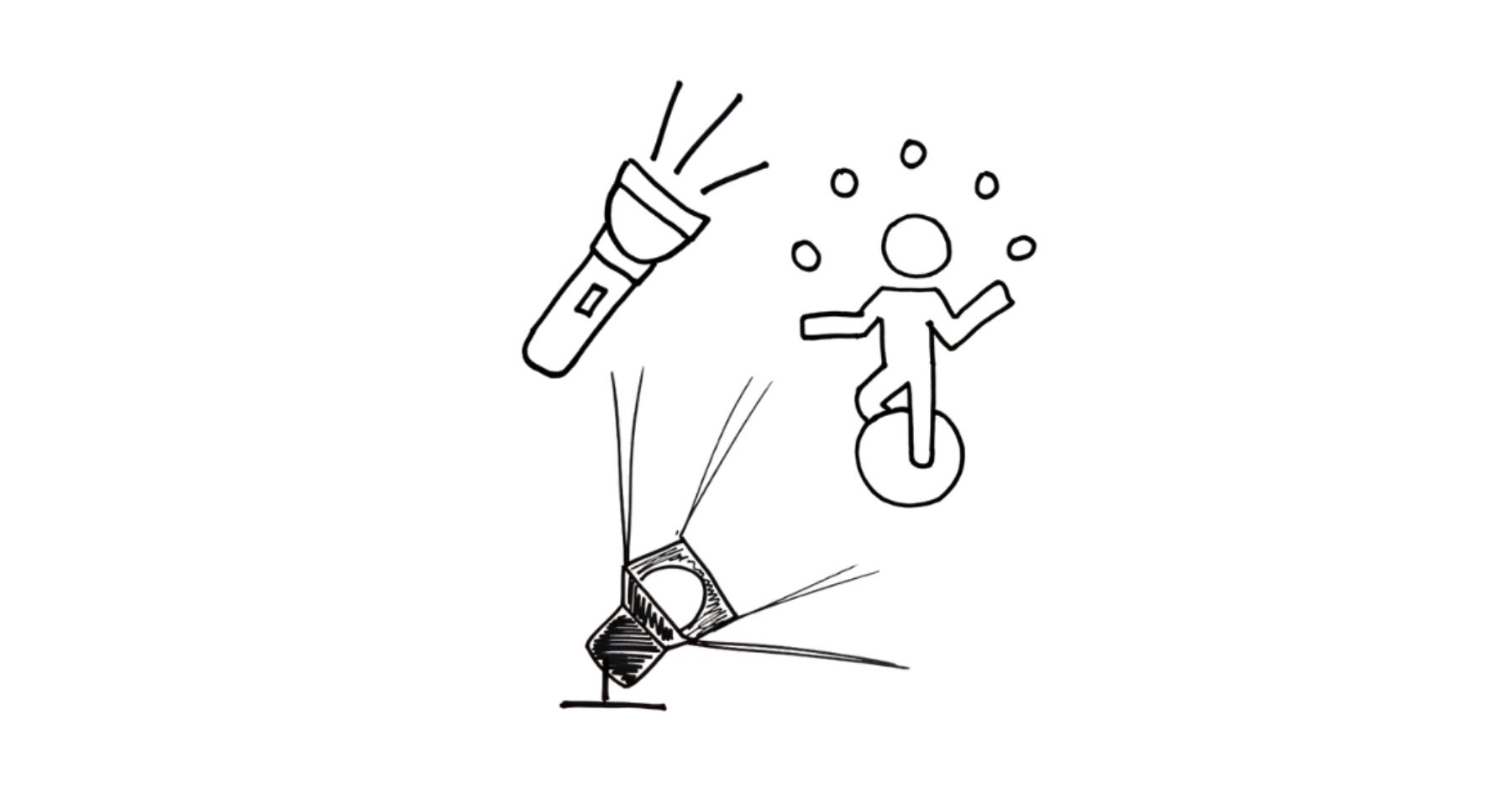
Understanding your attention is really important. At the same time, attention is pretty complicated. So, it can help to learn about three systems that work together to help you attend: your flashlight, your floodlight, and your juggler.
I learned this helpful trio of metaphors from an attention expert, Amishi Jha. And this way of picturing these three systems can really help you start to sense how your attention operates.
Your Flashlight
Your flashlight helps you focus on one important thing at a time.
It’s like you shine your attention on one thing, and whatever you focus on becomes bright, while other stuff you could pay attention to fades away. You need this to follow a train of thought, complete a task, tune in to how you are feeling or truly connect to another person.
Your Floodlight
Your floodlight lets you stay aware of what’s happening around you, even when your flashlight is focused on something.
You need this kind of attention to recognize when you need to change what you’re focusing on or as new and important information pops up in your environment. Like when you’re deep into a video game or phone call, and someone you care about walks into the room. Your floodlight let’s you realize they’ve arrived, even though your flashlight is hard at work.
Your Juggler
Then, there’s the juggler, which helps you switch and decide what to pay attention to when — balancing awareness (your floodlight), focus (your flashlight), and your goals.
You need this kind of attention to make the call on how to direct, shift or hold your focus. Like in the example above, you need your juggler to decide to stop playing that game or end that phone call and redirect your attention to the person who walked into the room.
How is all this helpful?
Just knowing that you have these three systems that work together is a huge step towards understanding your attention.
Once you’re aware of them, you can start to notice and feel when you are activating them.
When you’re deep into something — that’s your flashlight.
When something jumps out at you — that’s your floodlight.
When you shift gears — your juggler is busy.
The more you can start to feel these systems at work, the more chances you can find to be in control of them. You can start to notice when they may be activated, and you can wonder, are these three working together in a way that matches what I care about or what I want to do? Or, in a way that doesn’t really serve me?” Once you start to notice and wonder, it’s much easier to either continue or change what you’re doing to benefit YOU.
What next?
Share these ideas and whatever you discover about your attention with friends and family—that can help them get to know their attention systems better, too.
We’ll share more experiments and ways to explore your flashlight, your floodlight and your juggler (coming soon)!


