May you have your attention, please? - by Meghan Fitzgerald

May you have your attention, please?
A wish for all kids (and the letter we wrote to our three)


Have you noticed lately how your conversations, all too often, meander toward the state of our world and our collective wellbeing? And when you think about the experience of kids in your life and their futures, those questions get even more tender?
It makes you wonder…Is the most important question of this moment:
How do we help kids thrive in a world this distracting, dynamic, and even at times, dystopian?
We think so. And we deeply believe that adolescence is the window of opportunity in which to answer it. That’s why we’re launching a new project called a10d (“attend”). As part of that project, we’d like to welcome you to a10d.substack.com.
To help describe what we’re aiming for, I want to share a letter we wrote to our kids. Really, it’s an open letter to all kids.
A letter to our kids
Dear Loves,
Since before you were born, Dad and I have spent many of our waking hours wrestling with a big question:
What do you (and all kids) need in order to flourish?

In your early years, as you know, our best answer was to create Tinkergarten. With you three by our sides, we mobilized teachers and families across the country to help you and other kids build really important skills like creativity, empathy, and persistence, using all of your senses, playing and exploring outdoors. We learned that growth comes from a mix of struggles and wins, that kids are wired to learn, and that adults mostly need to trust the process.
Now you’re older, and the world feels like it’s changing at warp speed. How we spend our time, connect with others, and experience our lives is shifting dramatically. Some days, it feels like we woke up on another planet.
This progress will benefit you in real ways. And like all progress, it can also harm. Powerful forces are pushing to accelerate and profit from this change, even when it comes at the expense of us humans. You’ll need to continue to nurture all that you learned as a young kid, and you’ll need yet more skills to thrive in this landscape.
What won’t work
When adults get overwhelmed and worried for our kids, we tend to want to put the genie back in the bottle in an effort to protect you. But banning new technology, alone, won’t lead to your flourishing. Even if we could protect you fully now, we’d leave you unprepared when you leave our nest.
The truth is, technology is in the air we breathe. Screens and AI are already part of your everyday life in ways we can’t predict or control. These tools are no longer the big bad wolf; they’re features of the forest.
More importantly, you are powerful! You’re wired to adapt and grow even stronger through experience. And, your ability to learn will never be greater than it is right now in adolescence. If we focus only on protecting you, we’ll block you from building what you actually need: strong internal systems to navigate the world you’re growing up in. The world you’ll help to build.
Finally, if we banned everything, we would cut you off from real opportunities. Technology has the potential to unlock entirely new ways of learning, creating, and being human — if we can manage to keep humans at the center as we shape it.
We want you to be part of that shaping.
What we’re learning so far
Hope is abundant.
Though there is still much to learn, there’s one truth we can start with: None of us can thrive unless we can own our attention and build relationships with other humans.
Your attention is your most precious, limited resource. What you pay attention to determines what what you notice, what you engage in, how you spend your time, and what you experience of life.
Attention is a superpower, when you can channel it. When you control your attention, you can be present for your life. You can build the human skills you’ll need to contribute, connect, and flourish. Even in a world that is forever in flux.
Your attention is also a gift you give to others. It’s the currency of human connection, and connection makes life meaningful. How you relate to other people, and the relationships you form and cultivate will determine the quality of your days.
In short, attention is your gateway to a life worth living.
May you have your attention, please?
If we have one wish for you, it’s that you can command your own attention. You notice the world around you. You can direct, shift, and hold your focus on the people and things you care most about.
So what will we do about all this?
Just to be clear: we’ll still set limits on when new devices enter your world as well as the screen time, content, and social apps you use (or don’t use). And you’ll earn more independence over time. Intentional limits will always be a key piece of how we thrive (for Dad and I, too).
We’ll also start learning together, in a way that is not likely to feel like school; more like experimenting, playing with ideas, and discovering what works for you. The attention we’re talking about—the being present for life attention—comes from activating all that makes us uniquely human. Body, mind and spirit. It’s really good stuff, and you are designed for it.
We’ve been doing our homework: reading; talking with experts; and listening to you and kids your ages. Now, it’s time is to put that thinking into action, in a program not just for our family, but for families everywhere.
The goal is to help you, and other kids, strengthen your human superpowers and build the foundation to make your own choices about how you spend your attention on the people, interactions, and things that matter most to you.
Like Tinkergarten, we’ll share what we learn with a wider community, so other families can benefit too.
And, yes…we know, your parents are a bit crazy. Most of all, though, we’re crazy about you.
You ready?
Love, Mom and Dad
A little background
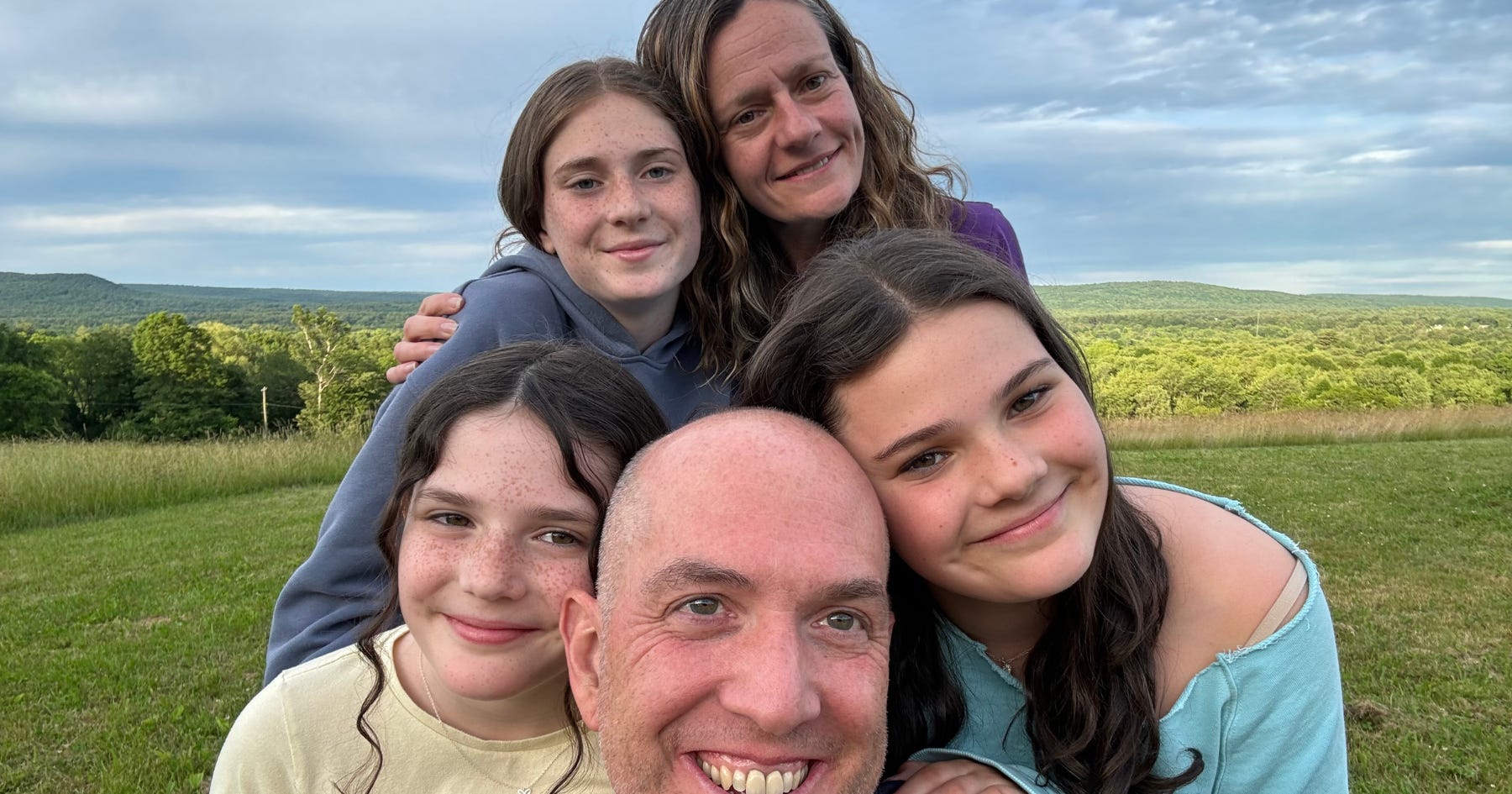
I’ve been an education leader for over 25 years, and my husband, Brian, has built impactful education products and programs for even longer. Together, we‘ve spent our careers working to help kids thrive—well before our own (now 11, 13, and 15) were even born.
Our first big attempt was to build Tinkergarten. Though it was impossible then to imagine the full range of challenges kids would face in their lifetime, we knew that spending more time outdoors, in community with others, taking risks, and developing a sense of wonder could help kids grow into creative, compassionate, and resilient humans. And, it turns out, we weren’t alone. We raised our young kids as we co-created an incredible, nationwide movement of people who felt the same.
Now our kids are adolescents. And in a media rich, AI-driven, and increasingly isolating world, the ground beneath them is shifting faster than any of us can make sense of. It feels like we, and our kids, need an additional set of skills to navigate these lives. The traditional instincts of parenting—protect, limit, ban—though tempting, are clearly no match for this moment.
That’s why we’re building a10d (“attend”)—a new way to help kids to take charge of their attention and develop the skills and mindsets they’ll need to flourish as humans. And, we know from experience that doing this work alone is not as powerful as doing it in close community with others who are asking the same questions.
As a first step, we’re launching a10d.substack.com—a place to share what we’re learning and be in conversation as we’re building a10d. Each week, we plan to bring you:
Fresh, digestible takes on the latest research on adolescence, attention, and the human skills kids need in order to flourish. And not just reasons to fear; plenty of hope, too.
Doable (and, we dare say, fun) experiments you can try with the young people in your life to build attention and human relationship skills. We have a hunch this kind of learning won’t happen overnight, but rather through a whole series of small, but powerful experiences.
Conversations with experts about how our world is evolving, what that means for our attention, how we can preserve what makes us uniquely human, and how to support each other and the kids we love. This is nuanced stuff; the more voices the better.
Tackling big challenges together means deeper learning, greater impact, and way more joy for everyone involved. We hope you’ll join in. We’d love your company!


Amazing. I was just reading a few posts today about intention and setting up your home and life, but they were focused on smaller kids, as most are. My kids not so small anymore, and these posts often leave me feeling like I have missed the window.
Then this beacon of light popped up in my feed, and it did exactly as intended- it caught my attention and gave me hope. You were a revolution in my life with Tinkergarten when my daughter was small, and I am all in for what you will bring to the table now. Cheering you on in this next great adventure. ❤️
Grateful and excited to be part of this new community! Tinkergarten helped build my confidence that I could strike a good balance between trusting my kids to know how to play, on one hand, and sharing intentional invitations and setting safe limits, on the other. This confidence is quickly fading as I look towards their upcoming adolescences! I suspect it's still a matter of helping them take the lead, both by sharing ideas and also by enforcing certain limits. But "child-led exploration" gave me mental images of carrying worms back and forth between puddles ninety times in a row, whereas "teen-led exploration" is giving me images of accidental overdoses and incel forums. Send help (and research, and experiments, and conversations with experts.)